Alphinland
A downloadable game for Windows
Step into Constance's house. Find the pieces of a life. Then find the door out of the grief.
Short description:
Alphinland is a short first-person narrative walking sim about grief, memory, and the worlds we build to survive them. You play as Constance, an elderly woman navigating her home in the quiet aftermath of her husband's death — gathering fragments of their life together, and slowly confronting the fantasy world she's been using to keep the loss at bay.
Inspired by Margaret Atwood's short story Alphinland, this vertical slice is a self-contained ~7-minute experience built in Unity over one month as a solo project.
About:
Constance is a fantasy novelist who has spent decades writing a sprawling invented world called Alphinland. Since her husband Ewan died, she's been retreating into it. The game is set on the evening of a heavy snowstorm, and Constance is alone in the house.
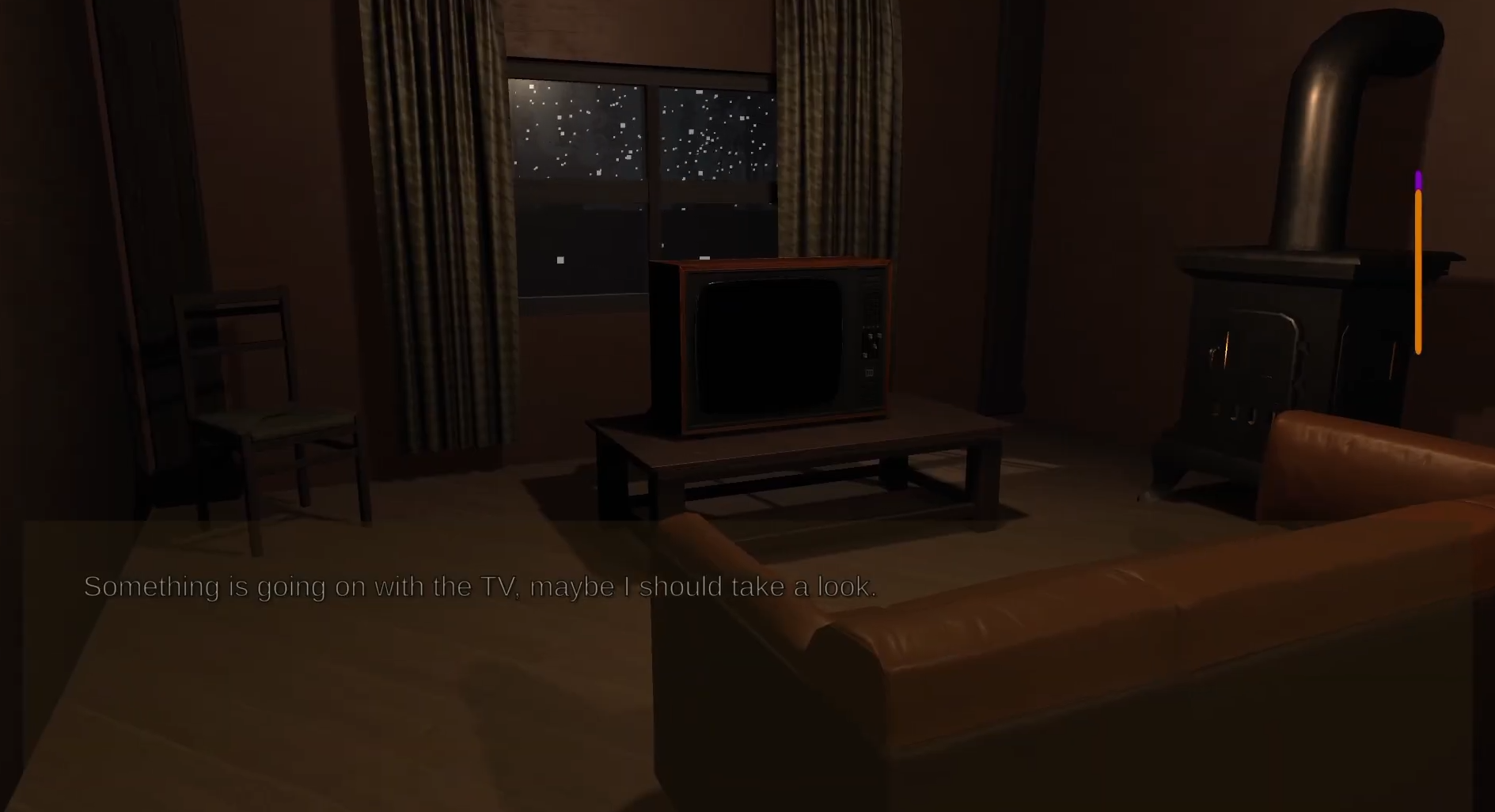
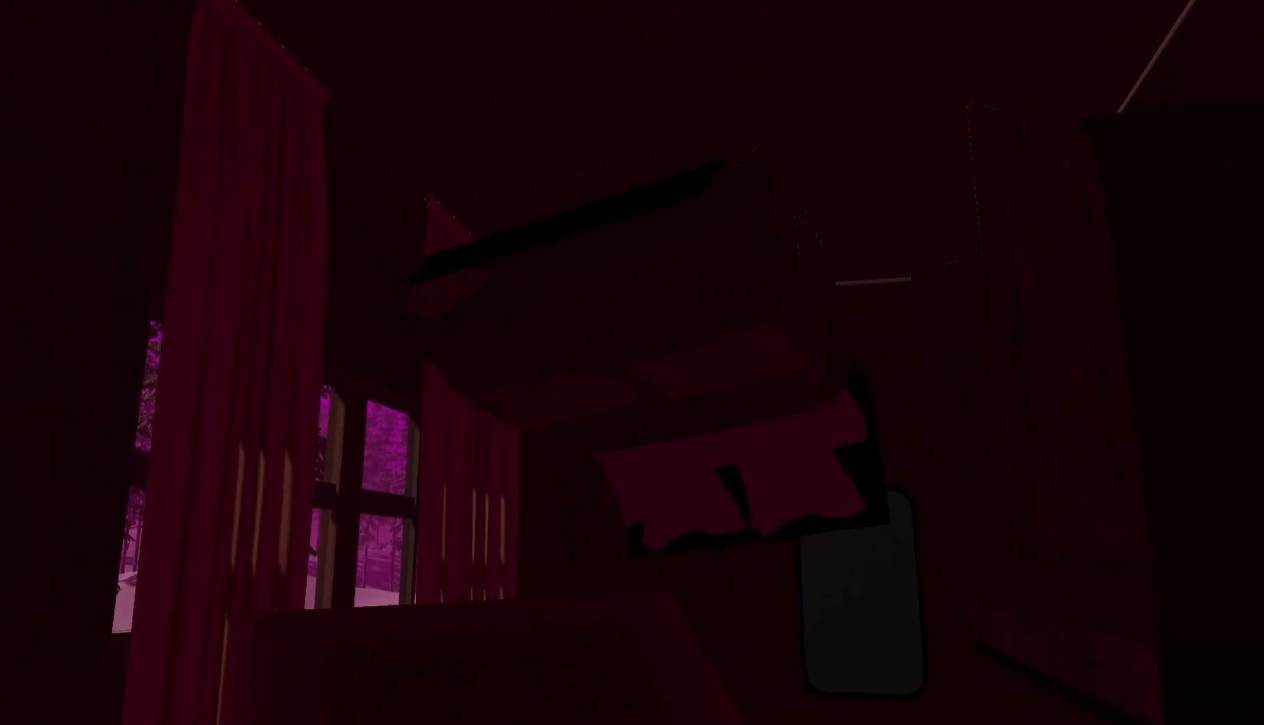
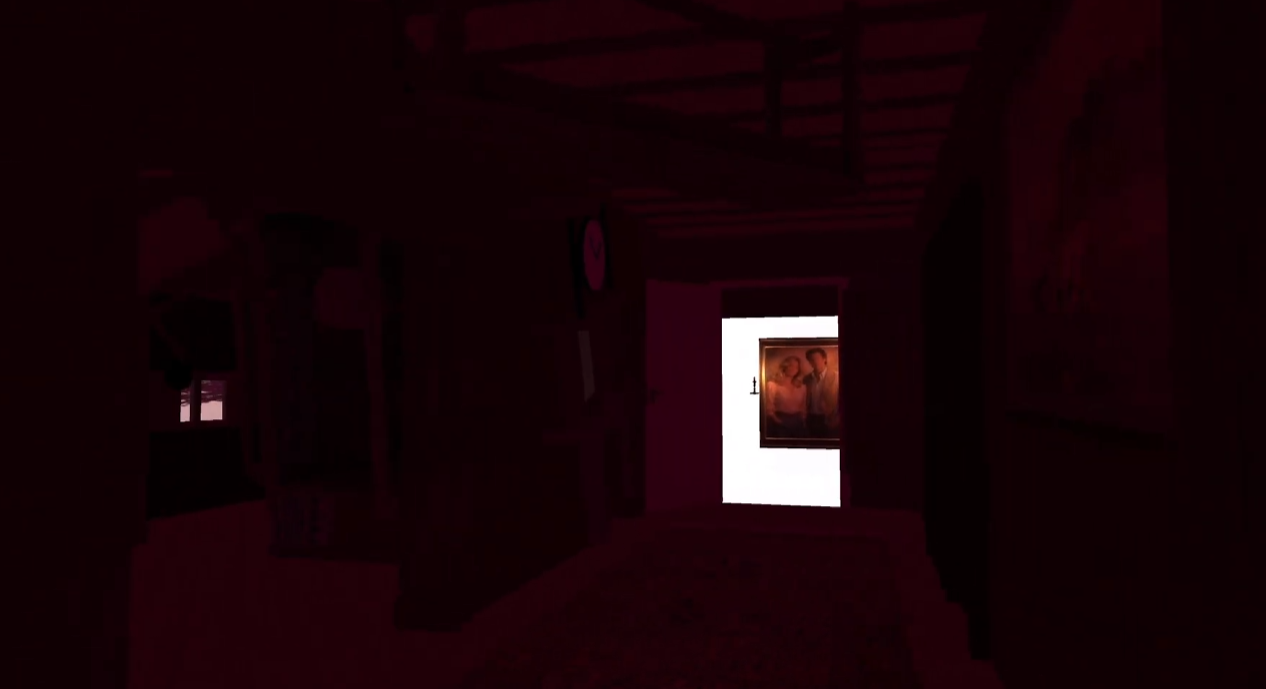
Exploration reveals the story in fragments a painting, a coat, a cable behind the TV. As Constance uncovers more, the house itself begins to shift: at key moments, the world transitions into Alphinland, a distorted pink-washed dimension where objects float weightlessly and the lighting grows darker. To escape the house and the dimension Constance must confront what she's been avoiding. This is a vertical slice, not a full game. It's meant to demonstrate the systems, the tone, and the design intent.
Features:
First-person exploration in a fully explorable house
A three-tier interaction system: read (Info), pick up (Pickup), and examine closely in hand (Inspect) inspired by the Resident Evil series
A dual-world system where the house transitions into the "Alphinland" dimension, with a custom pink shader pass, altered lighting, and floating-object physics
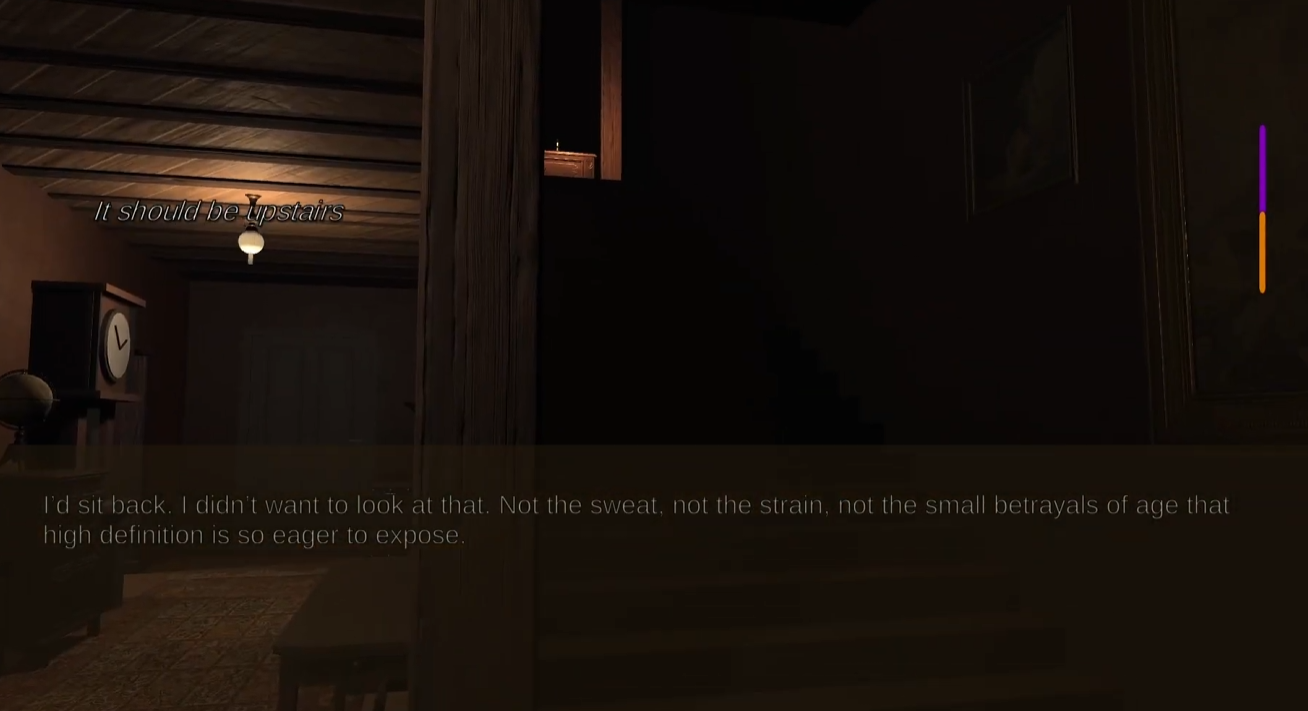
A diegetic grief meter that tracks the player's progress through meaningful interactions and gates the story beats and dimensional transitions
Environmental storytelling via hand-placed props, notes, and photographs
7 minutes of gameplay
Design Philosophy:
The central design question for Alphinland was: how do you make a player feel grief without telling them to feel it?
Atwood's story gave me the answer. In the original text, Constance's coping mechanism isn't a metaphor it's literal. She walks through her house talking to her dead husband, and the fantasy world she's spent her life writing starts to bleed into the real one. Grief, in the story, is a second world you go to when the first one becomes unbearable. I wanted the game to do the same thing mechanically, not just narratively.
Every system in the game is a translation of that idea into something the player does with their hands.
The three-tier interaction system exists because grief lives in the specific. "You can see a wedding photo on the wall" does nothing; picking up the wedding photo, turning it over in your hands, reading what's written on the back that's where the weight lives. I wanted players to earn each piece of Constance's life, not be shown it. The Inspect mode, borrowed from Resident Evil, turns examination into a deliberate ritual.
The dual-world transition makes Constance's retreat into fantasy into a place you actually go, not a cutscene. The pink shader pass, the darker lighting, and the floating furniture aren't just aesthetic, they make the Alphinland dimension feel wrong in the exact way grief feels wrong. Things should be on the floor. They aren't. You are somewhere you shouldn't be, and you need to find the door out.
The grief meter was the hardest design decision. A visible progress bar labeled "grief" would have been clumsy and insulting to the subject matter. A fully invisible system would have left players confused about what was gating progression. My solution was a diegetic meter present in the world, readable by attentive players, but never explicit. It rewards engagement without hand-holding.
The vertical-slice structure forced a design discipline I'd normally avoid: scoping down. The game is seven minutes long. Every interaction, every room, every transition had to justify its presence. A walking sim's biggest failure mode is tedium so I cut aggressively, kept pacing tight, and used the dimensional transitions as beats to reset the player's attention.
What I learned: mechanical empathy is hard. It's easy to write a character who is sad. It's much harder to build a game where the player slows down, pays attention, and feels the weight of a stranger's life without being told to. Alphinland is my first serious attempt at that, and it's the piece of work I'm most proud of.
What I built:
Design, writing, and implementation by Jordi Fabregat. Specifically:
Design: Authored the Game Design Document, narrative structure, and all puzzle and progression design (with writing feedback from UPF classmates on the GDD)
Interaction system: Designed and implemented the three-tier Info / Pickup / Inspect architecture in C#. The Inspect mode spawns an isolated instance of the target object in front of the camera, allowing free rotation and close examination before returning state cleanly
Dual-world transition: Built the system that shifts the house into the Alphinland dimension — a combined pink shader pass, lighting profile swap, and per-object physics state change so furniture and props begin to float
Grief meter: Designed and tuned the diegetic progression meter that tracks puzzle completion and essential interactions, gating story beats and dimensional transitions
Scene and level design: Built the house layout and prop placement to support the narrative pacing
Original models: Modeled the house, the clocktower, and the cable behind the TV from scratch
Tech:
Unity (C#)
Credits:
Design, programming, writing, and systems — Jordi Fabregat
GDD writing support — UPF classmates
Furniture and environment props — Unity Asset Store
Sound effects and music — Freesound and Unity Asset Store
Original models — Jordi Fabregat (house design, clocktower, TV cable)
Based on — Margaret Atwood's short story "Alphinland"
Development note: I used AI tools (Claude) as a coding assistant during development, as is standard practice. All design, architecture, and systems work is mine.
Download
Install instructions
To run the game:
Download the zip file and just execute the application.